

JOEL OLADELE, Abuja
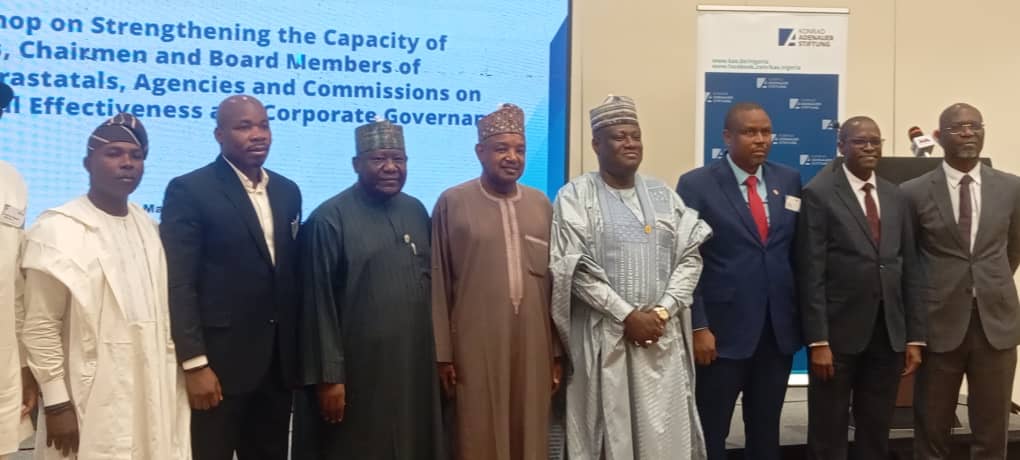
The Federal Government has urged chairmen, chief executive officers, and members of governing boards of federal parastatals, agencies, and commissions to uphold good governance, accountability, integrity, and efficient service delivery in line with the administration’s Renewed Hope Agenda.
The charge was given on Monday in Abuja by the Secretary to the Government of the Federation (SGF), Senator George Akume, at a three-day induction programme organised for heads and board members of federal institutions.
The programme, coordinated by the Bureau of Public Service Reforms (BPSR) with support from the Konrad Adenauer Stiftung (KAS) and the Department for International Development (DFID), now the Foreign, Commonwealth and Development Office (FCDO), is aimed at strengthening institutional governance and clarifying operational roles within government agencies.
Akume, who was represented by the Permanent Secretary, General Services Office, Dr. Ibrahim Abubakar Kana, said the training was designed to deepen participants’ understanding of government policies, procedures, and expectations in public service delivery.
He stressed that the public service remained the central machinery for policy implementation, noting that parastatals and agencies were created to execute specific mandates aligned with national priorities.
The SGF expressed concern over recurring conflicts between governing boards and chief executive officers in some agencies, warning that such misunderstandings had negatively affected productivity and institutional harmony.
According to him, governing boards are expected to provide policy direction and strategic oversight, while chief executive officers are responsible for day-to-day administration and management.
“Governing boards must operate strictly within their statutory mandates and refrain from interfering in daily administration,” he said, adding that clarity of roles was essential for institutional stability.
Akume also urged board members to familiarise themselves with the enabling laws governing their agencies and ensure adherence to government regulations in the discharge of their duties.
He outlined key responsibilities of governing boards to include safeguarding government’s long-term interests, strengthening internal control systems, ensuring effective risk management, monitoring management performance, and supporting strategic development goals.
The SGF further disclosed that the Bureau of Public Service Reforms had been directed to conduct impact assessments on agencies whose officials participate in the induction programme, in order to evaluate compliance with governance standards and improve institutional effectiveness.
He charged all appointees to justify the confidence reposed in them through professionalism, dedication, and commitment to transparency and accountability, reaffirming government’s commitment to strengthening public institutions under President Bola Ahmed Tinubu’s administration.
Earlier, the Director-General of the Bureau of Public Service Reforms (BPSR), Dasuki Ibrahim Arabi, said the induction programme was part of ongoing efforts to promote mandate-driven leadership and improve service delivery across the public sector.
Arabi said the training represented the 11th edition in the series and formed part of the bureau’s mandate to drive reforms aimed at making public institutions more efficient, professional, and citizen-focused.
He explained that the programme was designed to strengthen accountability systems, build institutional capacity, and promote ethical standards and performance management across agencies.
According to him, the initiative also aligns with the Renewed Hope Agenda, which seeks to reposition public institutions for better service delivery and improved governance outcomes.
Arabi cautioned participants that their decisions and conduct would directly impact citizens’ trust in government, stressing the importance of leadership integrity and accountability in public service.
“This induction offers a chance to clarify the boundaries between boards and management and align leadership with transparency, integrity, and results orientation,” he said.
He added that effective corporate governance remained essential for institutional sustainability, innovation, and responsiveness in delivering public services.
The BPSR boss further stated that the programme would equip participants with practical tools to strengthen oversight functions, improve management alignment, and enhance institutional performance.
The event was attended by representatives of the Independent Corrupt Practices and Other Related Offences Commission (ICPC), the Economic and Financial Crimes Commission (EFCC), Minister of Budget and Economic Planning Senator Abubakar Atiku Bagudu, as well as other governance and policy experts.
📢 Follow National Periscope on WhatsApp
Get breaking news and updates directly on WhatsApp.
Join WhatsApp ChannelPost Disclaimer
All rights reserved. This material and other digital content on this website are not and do not represent the stance of National Periscope but the statements of newsmakers mentioned therein.
For your detailed news reportage... contact the Editor at Joel2oladele@gmail.com







NAFDAC alerts public on circulation of fake Dano milk in Read more
New BPP DG Cautions Against Rumour Mongering, Pledges Open Door Read more
NiMet Honours 2025 Retirees for Exemplary Service JOEL OLADELE, Abuja Read more
The Inspector-General of Police (IGP), Olatunji Disu, has banned serving Read more