

JOEL OLADELE, Abuja
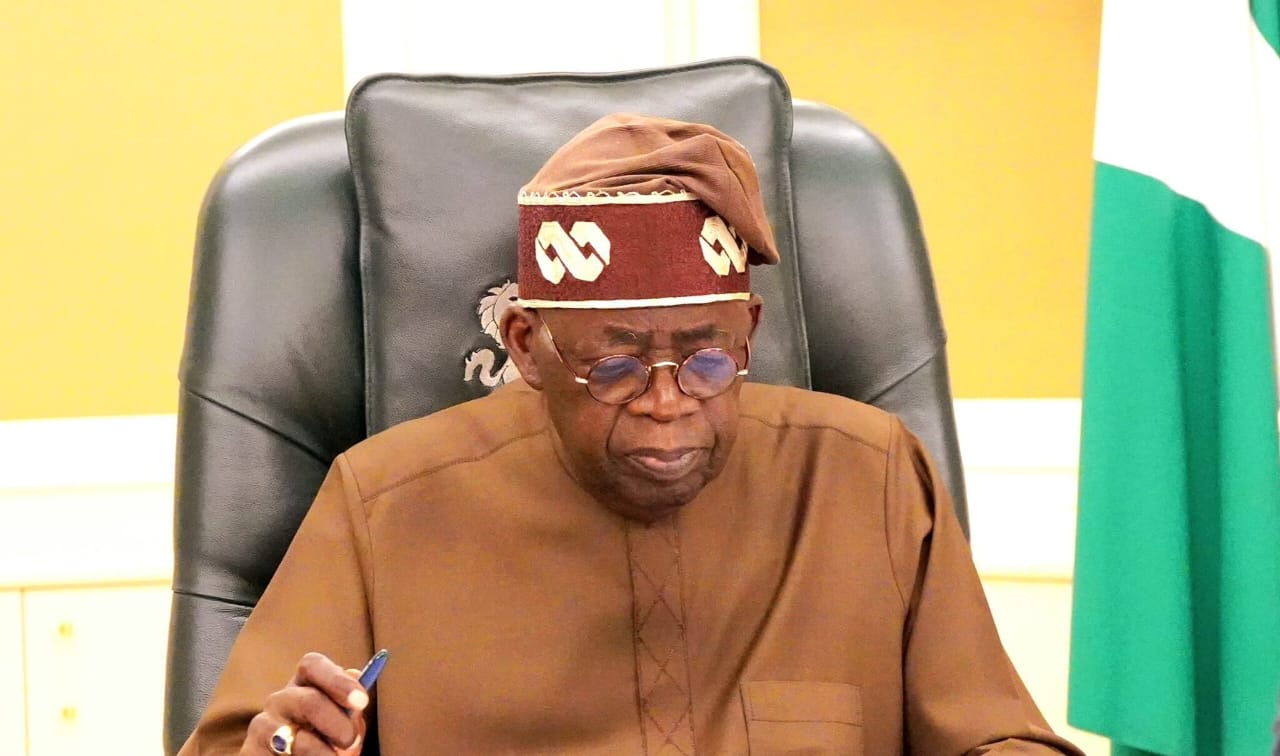
The Tinubu Media Volunteers (TMV) has commended the Federal Government for introducing a new policy on contract variation across Ministries, Departments and Agencies (MDAs), describing it as a major step toward transparency, cost control and improved accountability in public procurement.
The group said the reform would significantly reduce abuse of contract adjustments and strengthen due process in the execution of government projects.
Under the new framework, all contract variations and augmentations will now be centralised under the Bureau of Public Procurement (BPP), which will serve as a clearing house before such requests are forwarded to the appropriate approving authorities, including the Federal Executive Council (FEC), Ministerial Tenders Boards, the National Assembly and the National Judicial Council, where applicable.
In a statement signed by its Chairman, Chukwudi Enekwechi, and Secretary, Segun Ogedengbe, TMV noted that the new guidelines supersede the 2013 procurement rules, which required presidential approval for variations exceeding 15 per cent of initial contract sums above ₦1 billion.
The group explained that the reform is anchored on Section 5(a) and (o) of the Public Procurement Act, 2007, under the supervision of the BPP, and introduces stricter controls aimed at eliminating arbitrary contract cost escalations.
According to the new policy, contract variations of ₦10 billion and above must undergo scrutiny by the Federal Executive Council, National Assembly Tenders Board and National Judicial Council, depending on the project category.
It further stated that variations ranging from ₦5 billion to below ₦10 billion will be handled by Ministerial Tenders Boards, while those between ₦75 million and below ₦5 billion will be processed through Parastatal and Judicial Tenders Boards.
TMV also highlighted a key shift in the guidelines, noting that it is the value of the variation or augmentation—not the total revised contract sum—that will determine the approving authority, a change it described as critical to improving accountability in procurement processes.
The group further explained that no variation or fluctuation claim will be considered by any approving authority without a Certificate of “No Objection” from the Bureau of Public Procurement.
“It is noted that the latest guidelines supersede the 2013 guidelines which required presidential approval for variations above 15 per cent of the initial contract sum of ₦1 billion,” the statement read.
TMV added that the new framework also mandates strict adherence to final project designs before any variation request can be approved, a measure it said would help curb inflated project costs and ensure proper planning.
The group described the policy as timely and necessary, noting that it would help block financial leakages and restore discipline in contract administration across government institutions.
“We consider the new guidelines apt in Nigeria’s contract management and administration as they will help plug loopholes and restore sanity and transparency in the system,” TMV stated.
The organisation also commended the Tinubu administration for driving the reform, saying it reflects a commitment to good governance, prudent use of public resources and improved efficiency in project delivery.
According to TMV, the policy will not only enhance transparency but also ensure that public funds are deployed more effectively for national development priorities.
📢 Follow National Periscope on WhatsApp
Get breaking news and updates directly on WhatsApp.
Join WhatsApp ChannelPost Disclaimer
All rights reserved. This material and other digital content on this website are not and do not represent the stance of National Periscope but the statements of newsmakers mentioned therein.
For your detailed news reportage... contact the Editor at Joel2oladele@gmail.com







Kano’s Guber Appeal: Tight Security as NNPP, APC know Fate Read more
Bribery saga: Ganduje knocks Kano gov for alleged diversionary tactics Read more
APC lashes at Dino, Ajaka over post-election crisis in Kogi Read more
If Nigeria Is Not Working, Let’s Go Our Separate Ways Read more