
The Global System for Mobile Association (GSMA) has called on African governments to make smartphones more affordable, saying lower device costs are critical to accelerating artificial intelligence (AI) adoption and expanding digital inclusion across the continent.
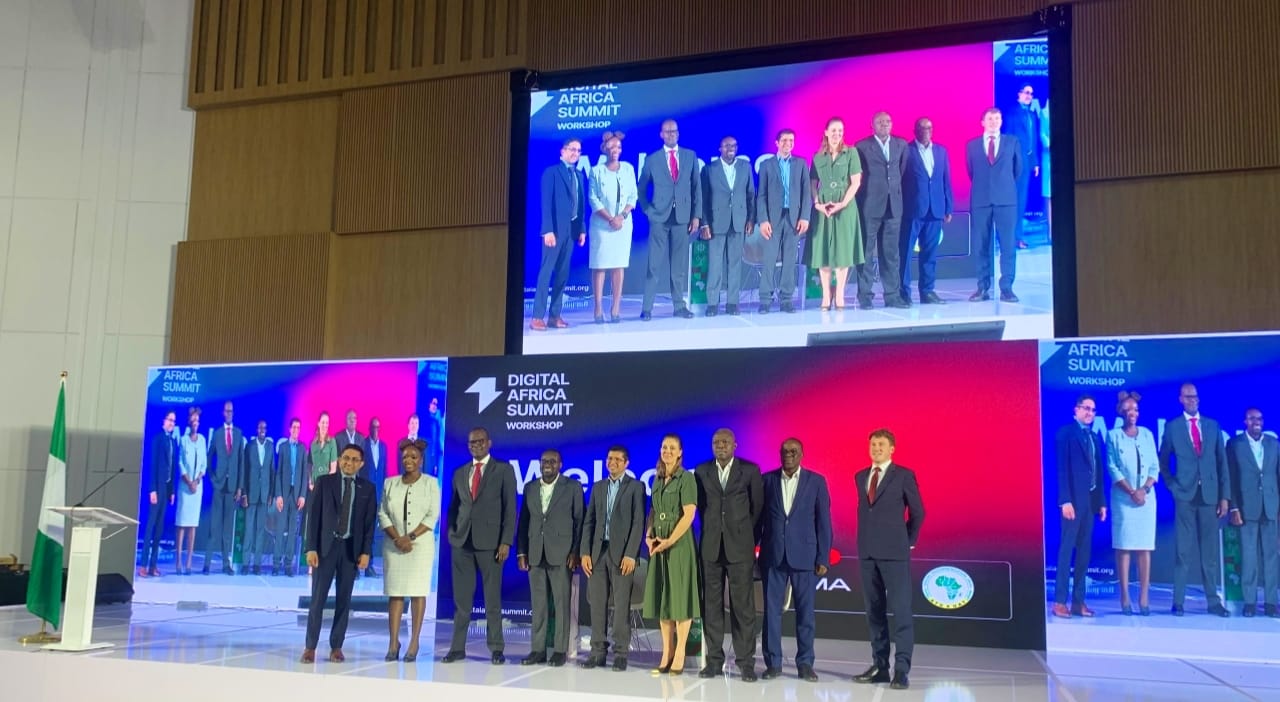
The call was made on Wednesday at the Digital Africa Summit Workshop in Abuja, held on the sidelines of the African Telecommunications Union (ATU) Conference of Plenipotentiaries, where regulators, policymakers and industry stakeholders examined strategies for deepening Africa’s digital transformation.
Speaking at the workshop, GSMA’s Senior Director for Public Policy, Africa, Caroline Mbugua, said Africa was entering what she described as the “era of intelligence,” but warned that millions of people risk being left behind because they cannot afford smartphones despite living in areas with mobile broadband coverage.
According to her, about 961 million Africans are covered by mobile broadband networks but do not use the services, a challenge the association describes as the continent’s “usage gap.”
“We have 961 million Africans that are covered by mobile broadband services but are not using the service. This is what we refer to as the usage gap. If this remains unaddressed, it means this number will be left behind when it comes to the adoption of AI,” Mbugua said.
She attributed the problem largely to the high cost of smartphones and urged governments to introduce fiscal reforms, particularly by reducing taxes on entry-level devices, to make them more accessible to first-time users.
Citing South Africa as an example, Mbugua said the removal of a nine per cent luxury goods tax on entry-level smartphones had significantly boosted smartphone adoption while reducing dependence on feature phones.
“There is demand for smartphones. Customers are willing to use the service. Affordability is the challenge,” she said.
She also drew attention to the continent’s remaining connectivity gap, noting that about nine per cent of Africa still lacks mobile broadband coverage, largely because rural and remote communities are expensive to serve.
According to her, studies show that deploying telecommunications infrastructure in such areas can cost between two and five times more than in urban centres, while generating up to ten times less revenue, making network expansion commercially difficult.
To address the challenge, Mbugua advocated technology-neutral regulatory frameworks that would allow operators to deploy the most appropriate technologies, including satellite services, to connect underserved communities.
She also called for regulatory parity, arguing that operators providing similar communications services should be subject to the same rules to ensure fair competition and better outcomes for consumers.
“Same service, same rules. That ensures competition is not distorted and consumers benefit from innovative and affordable solutions,” she said.
Mbugua also unveiled the GSMA Digital Africa Index, describing it as a data-driven tool designed to help governments assess the level of digitalisation in their countries and identify policy reforms needed to attract investment and improve connectivity.
She noted that while Nigeria performed well across several indicators, there was still room for improvement through evidence-based policymaking.
The GSMA executive further disclosed that the association would publish its AI Atlas initiative aimed at increasing the representation of African languages in large language models to make artificial intelligence more inclusive. She said Nigeria is among the participating countries, with four indigenous languages already incorporated into the platform.
Also speaking, GSMA’s Head of Policy and Regulation, Michaela Angonius, urged African governments to modernise telecommunications licensing by replacing technology-specific licences with technology-neutral authorisation systems capable of accommodating emerging technologies such as satellite communications.
She also called for reforms to Universal Service Funds (USFs), saying large portions of the funds remain unused despite operators continuing to pay levies that ultimately increase the cost of telecommunications services for consumers.
“A lot of Universal Service Funds are unused. That effectively becomes an additional tax on the industry, which raises prices for end users,” Angonius said.
She maintained that removing or reducing taxes on entry-level smartphones remains one of the fastest ways to improve affordability and encourage first-time smartphone ownership across Africa.
The Secretary-General of the African Telecommunications Union (ATU), John Omo, stressed the importance of evidence-based policymaking in advancing the continent’s digital economy.
Quoting findings from the 2026 GSMA Mobile Economy Africa Report, Omo said mobile technologies and services contributed $240 billion to Africa’s economy, supported 13 million jobs and generated $45 billion in public revenue.
He said expanding network coverage alone would not deliver meaningful digital inclusion unless people could afford devices, acquire digital skills, trust digital platforms and access services that improve their daily lives.
“We should not simply receive these findings, but interrogate them, understand them and use them to support better decision-making,” Omo said, urging regulators across the continent to make greater use of the Digital Africa Index in shaping future policy reforms.
📢 Follow National Periscope on WhatsApp
Get breaking news and updates directly on WhatsApp.
Join WhatsApp ChannelPost Disclaimer
All rights reserved. This material and other digital content on this website are not and do not represent the stance of National Periscope but the statements of newsmakers mentioned therein.
For your detailed news reportage... contact the Editor at Joel2oladele@gmail.com







Nigeria’s Newest Telecom Operator Vitel Wireless Launches “Data That Never Read more
The Federal Government and its African partners have launched ATLAS Read more
NITDA launches female ICT programme to close gender tech gap. Read more
NIMC, NCC unveil collaborative efforts to enhance NIN-SIM linkage The Read more