

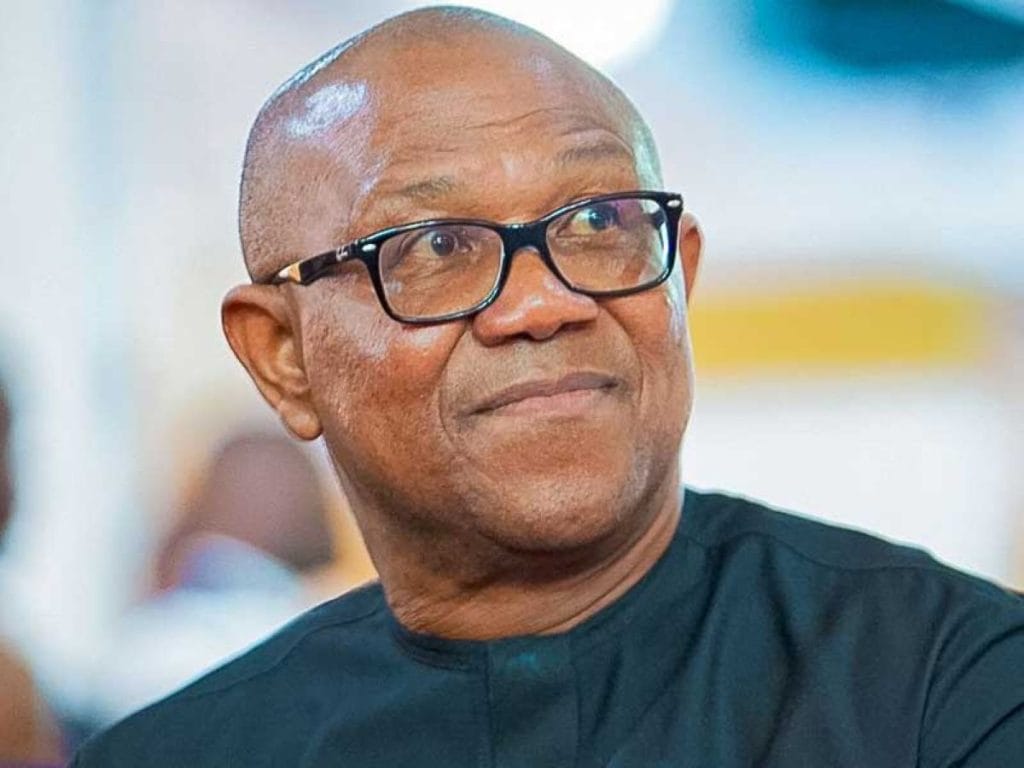
The Nigeria Democratic Congress (NDC) has set its sights on replicating Peter Obi’s 2023 presidential election victory in Lagos State, saying changing voter preferences could produce another upset in the state in 2027.
The party’s Lagos Central senatorial candidate, Bamofin Ladipo Johnson, said the NDC was building a grassroots structure across wards and polling units to take advantage of what he described as an evolving political consciousness among Lagos voters.
Obi, who contested the 2023 presidential election on the platform of the Labour Party, defeated the candidate of the All Progressives Congress (APC) in Lagos, disrupting the state’s longstanding reputation as a stronghold of the political establishment associated with President Bola Ahmed Tinubu.
Johnson said the result demonstrated that voters in the state were prepared to move beyond traditional political loyalties when presented with a candidate and platform they considered credible.
He said the NDC was seeking to consolidate that shift through community engagement, online town hall meetings and voter education, alongside the establishment of structures at ward and polling-unit levels.
According to him, the party has been engaging market women, artisans, professionals, entrepreneurs and young people to understand their concerns and develop policies around their socio-economic needs.
Johnson identified rising food prices, transportation costs, inflation and pressure on household incomes as issues likely to influence voting decisions in 2027.
He argued that the economic difficulties facing many households were making voters increasingly interested in employment opportunities, effective governance and accountability rather than simply following traditional party loyalties.
The NDC candidate said the party would campaign on production-driven economic policies, fiscal discipline and investment in human capital, which he described as an alternative to the direction of the current administration.
He also pointed to the changing demographics of Lagos as a factor that could reshape the political contest in 2027.
According to him, the state’s expanding population comprises young professionals, entrepreneurs, students, skilled workers and residents from different parts of the country, many of whom are less influenced by traditional patronage networks.
Johnson said such voters were more likely to focus on issues such as employment, infrastructure, transparency and accountability.
He described the NDC as a “Third Way” in Nigerian politics, with its campaign centred on inclusion, equity and institutional reforms.
He said women, young people and non-indigenous residents would form a significant part of the party’s mobilisation strategy.
Beyond voter mobilisation, Johnson disclosed that the party was developing a vote protection strategy that would involve recruiting and training polling agents across Lagos Central.
He said the agents would be trained to monitor voting, understand electoral procedures and respond appropriately to irregularities within the provisions of the law.
The NDC also plans to deploy decentralised real-time reporting systems through mobile applications, which would enable polling agents and voters to transmit election updates, video evidence and polling-unit results to a central situation room.
Johnson said the party would collaborate with civil society organisations, election observers and legal practitioners to monitor compliance with electoral laws and pursue documented violations through lawful channels.
He urged the Independent National Electoral Commission (INEC) and security agencies to maintain neutrality, protect voters and ensure transparency during the election.
The candidate said the credibility of the 2027 election would depend largely on the willingness of electoral and security institutions to discharge their constitutional responsibilities without bias.
He maintained that Obi’s 2023 performance should not be regarded as an isolated political event, arguing that it showed Lagos voters could break with established voting patterns.
The challenge for the NDC, however, is converting that previous opposition breakthrough into a sustained political structure capable of competing with the APC’s entrenched organisation across the state.
Johnson said the party was working to build a coalition comprising young voters, professionals, business owners, non-indigenous residents and dissatisfied members of established political parties.
He expressed confidence that if the coalition was effectively mobilised, the NDC could repeat the kind of upset witnessed in Lagos during the 2023 presidential election.
📢 Follow National Periscope on WhatsApp
Get breaking news and updates directly on WhatsApp.
Join WhatsApp ChannelPost Disclaimer
All rights reserved. This material and other digital content on this website are not and do not represent the stance of National Periscope but the statements of newsmakers mentioned therein.
For your detailed news reportage... contact the Editor at Joel2oladele@gmail.com





National Assembly Adopts June 12 as Annual Presidential Address Day Read more
Tinubu, Shettima, APC, Governors, Others Mourn Gov. Ododo’s Father JOEL Read more
JOEL OLADELE, Abuja The All Progressives Congress (APC) has dismissed Read more
APC fires back at PDP, says Tinubu’s New Year message Read more