

EU Raises Alarm as Nigeria Loses 38m Tonnes of Food Annually

Nigeria is losing an estimated 38 million tonnes of food every year, the highest figure in Africa, according to the European Union, which has warned that the trend poses serious risks to food security, the environment and the economy.
The concern was raised in Abuja during the commemoration of the International Zero Waste Day, where the Deputy Ambassador of the EU Delegation to Nigeria and ECOWAS, Zissimos Vergos, described the scale of food waste in the country as alarming.
Vergos said the volume of food lost annually represents not only a missed opportunity to tackle hunger but also a waste of critical resources used in production.
“This is not just a loss of food, it is a squandering of precious resources, a missed opportunity to combat hunger, and a direct threat to our planet’s health,” he said.
He noted that food loss and waste contribute significantly to environmental degradation, accounting for a sizeable share of global greenhouse gas emissions and methane output, thereby worsening climate change.
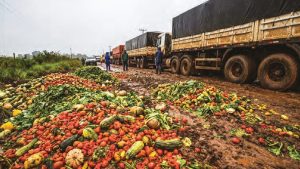
The EU official called for coordinated action across government, private sector and households to curb waste along the food value chain, stressing that reducing food loss is key to achieving sustainable consumption and production targets.
He also highlighted ongoing efforts by the Nigerian government, including the circular economy roadmap and policy initiatives aimed at improving waste management, describing them as important steps toward systemic change.
To address the problem, Vergos outlined measures drawn from European experience, including investment in rural infrastructure such as roads, storage facilities and cold chains, as well as strengthening links between farmers, processors and markets to encourage value addition.
He further urged the integration of waste reduction and recycling principles into school curricula to build a culture of sustainability from an early age.
The event, organised in partnership with the Nigerian government and the United Nations Industrial Development Organization, underscored the urgent need for practical solutions to reduce food waste and promote efficient resource use.
In his keynote address, the Minister of Environment, Balarabe Lawal, said food waste remains a major challenge with far-reaching consequences.
“Every discarded meal represents wasted resources such as water, energy, labour and capital, while Nigerians continue to face food insecurity. Addressing food waste is therefore central to sustainable development,” he said.
Lawal disclosed that the ministry had introduced projects targeting food waste reduction in major markets, particularly to tackle post-harvest losses.
Also speaking, the UNIDO representative in Nigeria, Philbert Johnson, emphasised the importance of efficient food systems, warning that waste undermines economic stability and social wellbeing.
“When food systems fail, when food is lost or wasted, the consequences ripple across our economies, our environment, and our communities,” he said.
He reaffirmed the organisation’s commitment to supporting Nigeria in building resilient and sustainable agro-industrial systems.
The discussions highlighted the broader implications of food waste, noting that beyond lost produce, it also entails wasted water, energy and labour, while intensifying climate risks and undermining efforts to achieve a circular, zero-waste economy.
📢 Follow National Periscope on WhatsApp
Get breaking news and updates directly on WhatsApp.
Join WhatsApp ChannelPost Disclaimer
All rights reserved. This material and other digital content on this website are not and do not represent the stance of National Periscope but the statements of newsmakers mentioned therein.
For your detailed news reportage... contact the Editor at Joel2oladele@gmail.com






CEFSAR Commends NAFDAC on N800m Toxic Agro-Chemicals Ban Enforcement The Read more
FG unveils comprehensive mechanisation plan to boost agricultural productivity The Read more
FG urges Agric research institute to increase IGRs Olaitan Ogundele Read more
Over 33 million Nigerians may face food crisis In 2025 Read more