

Trump Orders Naval Blockade of Hormuz Strait After Iran Talks Collapse

Tensions in the Middle East escalated sharply on Sunday after U.S. President Donald Trump directed the American Navy to begin a blockade of the Strait of Hormuz, following a breakdown in negotiations with Iran over its nuclear programme.
In a strongly worded statement, Trump said talks had recorded progress on several fronts but ultimately failed to address what he described as the core issue — Iran’s nuclear ambitions.
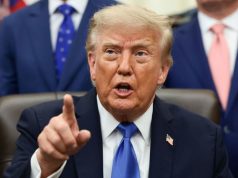
“Effective immediately, the United States Navy will begin the process of blockading any and all ships trying to enter or leave the Strait of Hormuz,” he said, framing the move as a response to what he called “world extortion.”
The U.S. leader accused Tehran of creating instability in the critical oil transit corridor, alleging that Iranian authorities had hinted at the deployment of naval mines to intimidate international shipping.
He disclosed that U.S. forces had been instructed to intercept vessels in international waters suspected of paying tolls to Iran for safe passage through the strait.
“No one who pays an illegal toll will have safe passage on the high seas,” Trump warned, adding that American forces would also move to clear any mines believed to have been planted in the area.
The statement carried a stern military warning, with Trump threatening forceful retaliation against any hostile action.
“Any Iranian who fires at us, or at peaceful vessels, will be blown to hell,” he said.
The Strait of Hormuz remains one of the world’s most strategic maritime routes, serving as a gateway for a significant share of global oil exports. Any disruption to traffic through the narrow channel is expected to have immediate consequences for energy markets and international trade.
Trump indicated that allied nations could join the enforcement of the blockade, although he did not specify which countries would be involved.
Iran had yet to respond officially as of the time of filing this report, but the development marks a major escalation in already strained relations between Washington and Tehran.
Analysts warn that the move could heighten the risk of a broader military confrontation in the region, particularly given the fragile ceasefire that had only recently eased tensions.
📢 Follow National Periscope on WhatsApp
Get breaking news and updates directly on WhatsApp.
Join WhatsApp ChannelPost Disclaimer
All rights reserved. This material and other digital content on this website are not and do not represent the stance of National Periscope but the statements of newsmakers mentioned therein.
For your detailed news reportage... contact the Editor at Joel2oladele@gmail.com






Iran Confirms Death of Supreme Leader Khamenei, Daughter [caption id="attachment_18405" Read more
Europe needs to ‘wake up’ and face the Iran threat, Read more
Israel-Hamas conflict: Bethlehem cancels Christmas celebrations The birth of Jesus Read more
Concert attack: Russia persists in blaming Ukraine despite its Denial Read more